
Hydrogen Disbonding Test Services for Industrial Applications
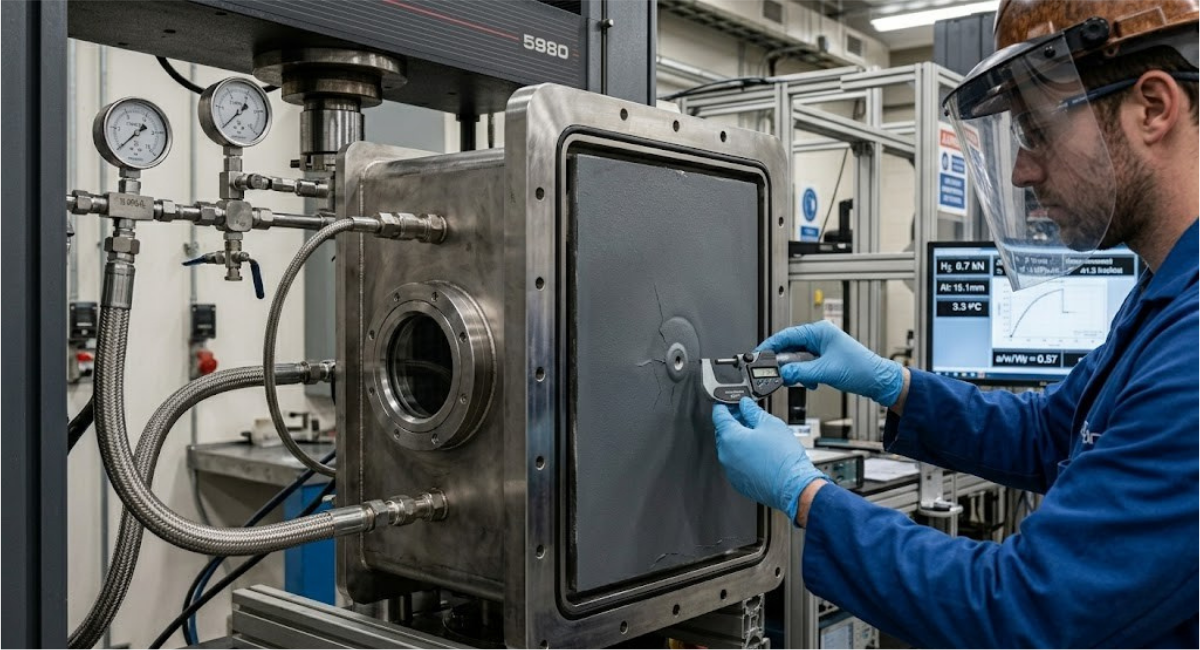
Introduction to Hydrogen Disbonding Test
Hydrogen Disbonding Test is done to see how a coating reacts when hydrogen tries to pass through it and collect at the steel surface. In oil and gas plants, this situation is quite common, especially in sour service lines. Sometimes coatings look perfectly fine from outside, but internally the bonding may start weakening. This test helps in identifying that hidden risk at an early stage.
In this procedure, a small cut or holiday is made on the coated panel and the sample is exposed to hydrogen pressure at a set temperature for a defined period. After testing, the loosened or lifted coating area is checked and measured manually. If the disbonded zone is within acceptable limits, the coating system is considered suitable. It’s a straightforward but very important evaluation before approving coatings for critical projects.
What is Hydrogen Disbonding Test and Why is it Important?
Hydrogen Disbonding Test is carried out to understand how a coating behaves when hydrogen tries to penetrate through it and reach the steel surface. In real project conditions, especially in sour service pipelines, hydrogen exposure is quite common. Sometimes everything appears normal from outside, but internally the bond between coating and metal may start weakening. That’s where this test becomes useful.
In the lab, a small artificial defect is made on the coated panel, and the sample is kept under controlled temperature and hydrogen pressure for a specific period. After the exposure cycle, technicians check how much the coating has lifted around that defect. The measurement may look simple, but it gives practical insight into coating performance. Many site issues in the past have shown why checking this in advance is a smart move.
From a project point of view, coating failure can mean corrosion, repair work, and unexpected downtime. Companies don’t want surprises once the pipeline is commissioned. Doing this test before approval helps avoid those headaches later. It works like a preventive check rather than a corrective action.
Why Hydrogen Disbonding Test is Important:
- Verifies coating adhesion in hydrogen environments
- Minimizes long-term corrosion risk
- Supports safe pipeline operation
- Helps in quality approval before installation
- Reduces future maintenance and repair cost
Importance of Hydrogen Disbonding Test in Sour Service Environments
In sour service environments, hydrogen sulfide is commonly present and it can generate atomic hydrogen during operation. This hydrogen slowly moves through the coating layer and reaches the steel surface. At first, nothing looks unusual from outside, which is why many people underestimate the risk. But inside, pressure may start building at the coating–metal interface.
The Hydrogen Disbonding Test becomes important in such situations because it checks this hidden behavior before the material goes to site. In the lab, a small defect is made on the coated sample and it is exposed to hydrogen pressure and temperature for a fixed time. After completion, the lifted coating area is measured carefully. Sometimes the difference between a good and poor coating system is visible only after this step.
In sour service projects, failure is not just about repainting; it can mean corrosion, leakage, or shutdown. Engineers who have handled field repairs know how costly that can become. So instead of reacting later, companies prefer to test and confirm performance in advance. It’s more of a practical safeguard than just a formal requirement.
Why it Matters in Sour Service:
- Detects coating weakness under hydrogen exposure
- Reduces internal corrosion risk
- Supports safer long-term operation
- Helps avoid expensive maintenance work
- Builds confidence before project commissioning
Applications of Hydrogen Disbonding Test in Oil & Gas Industry
Hydrogen Disbonding Test is not just a formal lab requirement; it is often linked to real field experience. Long pipelines that carry sour crude or gas can remain in service for 15–20 years. During that time, hydrogen generated from H₂S exposure may slowly travel beneath the coating. A few past project cases have shown that when disbonding starts internally, it is difficult to detect until corrosion appears.
Refineries and gas plants also apply this test while approving coatings for pressure vessels and process piping. These units operate at higher temperatures, which can increase hydrogen activity at the metal surface. Instead of depending only on supplier claims, inspection teams usually ask for actual test data. It gives a clearer idea of how the coating might behave after years of operation.
For offshore pipelines and subsea structures, the application becomes even more practical. Repairing a failed coating under water is expensive and time-consuming. Because of that, many EPC contractors include Hydrogen Disbonding Test results as part of their technical evaluation. It may look like a small verification step in the beginning, but it can prevent major operational and financial issues later on.
Ensure Your Materials Perform Safely
Share your requirement today and get expert guidance on the right test plan for your materials.

